
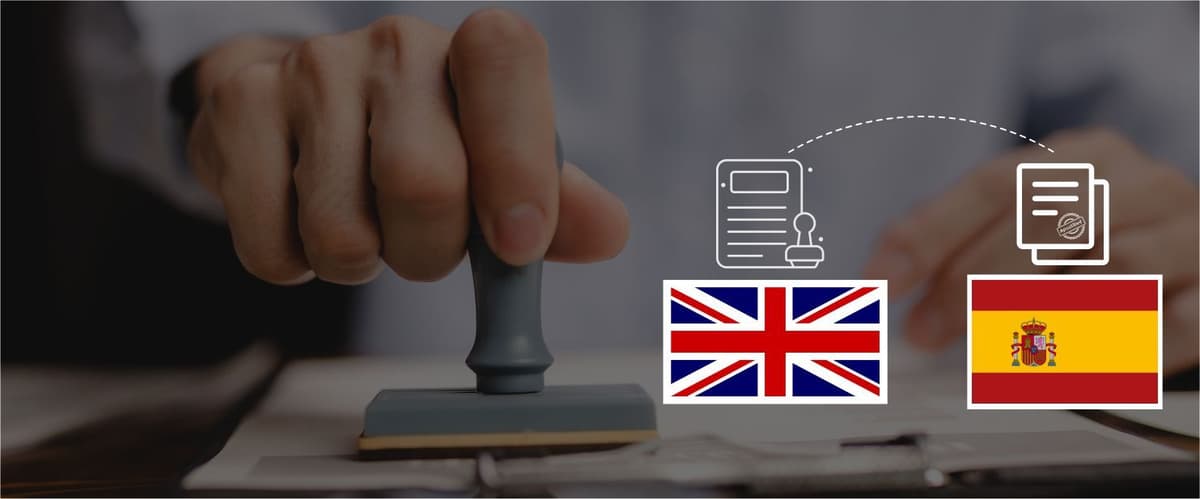
Spain's official language is Castilian Spanish (castellano), and Spanish authorities, from the civil registry to the notary to government departments, work in Spanish. An apostilled document in English, while legally authenticated, still needs to be in a language the receiving authority can read and process.
This means that almost all apostilled UK documents will need to be accompanied by a certified Spanish translation before they can be used with Spanish authorities.
There is an important distinction, however, between different types of translations:
It is critical that you use only sworn translators for documents destined for Spanish official use.
In Spain, sworn translators (Traductores e Intérpretes Jurados) are individuals who have passed a rigorous examination administered by the Spanish Ministry of Foreign Affairs and have been officially appointed and sworn in. They are authorised to produce certified translations that are legally equivalent to the original document in Spain.
Importantly, a UK-based translator, however qualified, cannot produce a sworn translation for Spanish official use unless they hold the specific Spanish sworn translator appointment. This is a common source of confusion. A translator who is an accredited member of the Chartered Institute of Linguists in the UK, or who has a degree in translation, does not automatically qualify as a jurado translator for Spanish purposes.
You have two main options for getting properly sworn translations for Spain:
The Official Sworn Translator List
The Spanish Ministry of Foreign Affairs maintains a list of officially appointed sworn translators. This list is publicly accessible and can be found on the Ministry's website. When using a translation agency for Spain-bound documents, ask them to confirm that the translator holds the Spanish sworn translator appointment and ask for their registration number.
What Needs to Be Translated?
In general, all UK documents you submit to Spanish authorities should be accompanied by sworn Spanish translations. This includes:
Some documents that are simple and follow a standard format (such as birth certificates) may occasionally be accepted without a separate translation if the Spanish authority is familiar with the format, but you should not rely on this. Always provide the translation unless specifically told it is not required.
The Apostille on the Translation
A common question is: does the Spanish translation itself need an apostille? The answer in most cases is no the apostille is on the original UK document, and the sworn translator's certification on the translation is sufficient authentication for the translation itself. The sworn translator's stamp and signature serve as the authentication of the translation.
However, if the translation has been produced by a notary (rather than a sworn translator), the notarised translation may need to be apostilled separately. This situation is less common but can arise in certain contexts.
Practical Translation Tips
Need help with your application or background check?
Contact us now and speak with a dedicated Globeia expert today.

