

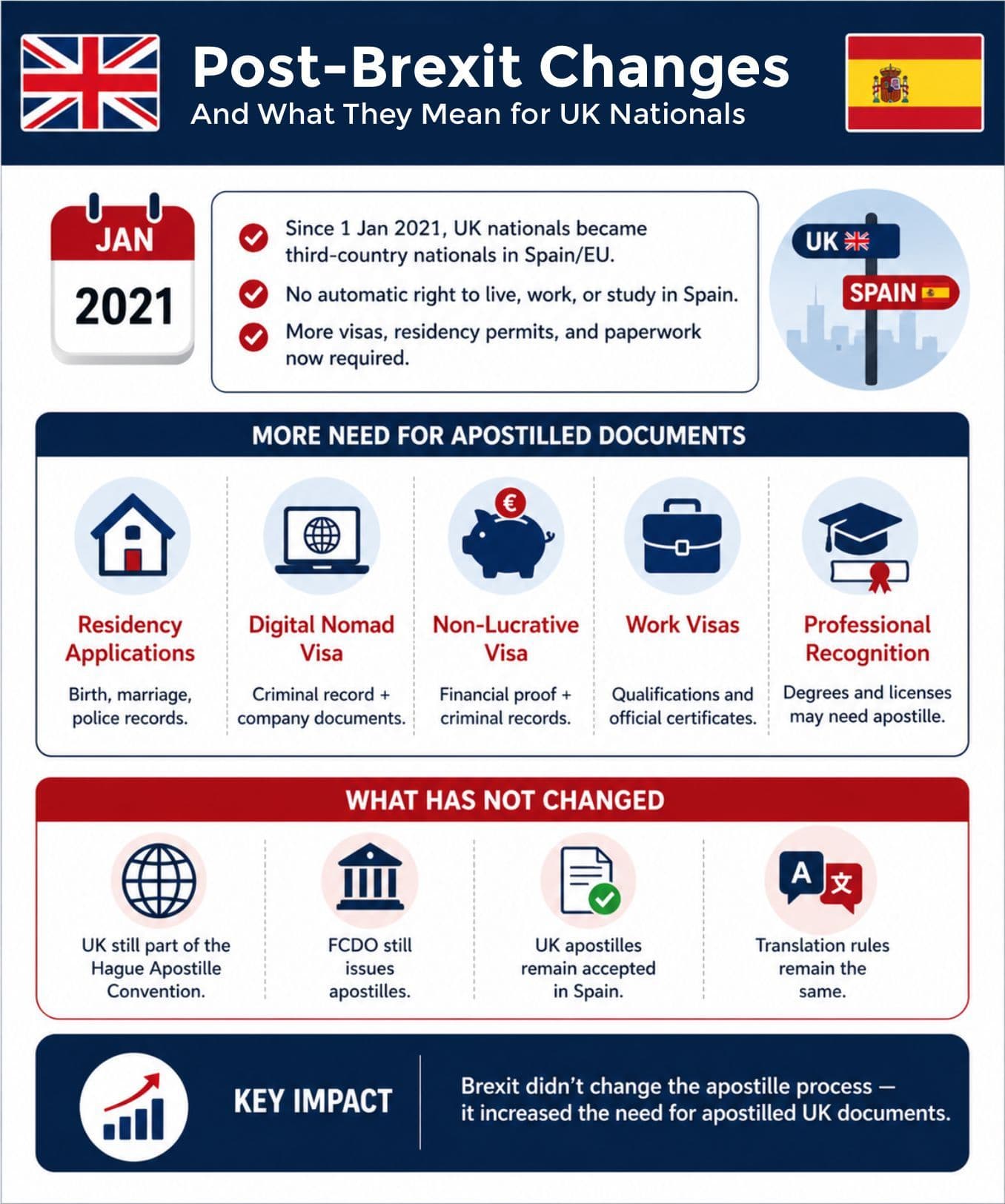
On 31 January 2020, the United Kingdom formally left the European Union, with the transition period ending on 31 December 2020. From 1 January 2021, UK nationals became “third-country nationals” in Spain and the EU, losing the automatic right to live, work, or study under EU freedom of movement rules.
Existing UK residents in Spain remain protected under the Withdrawal Agreement, but new arrivals now face visa requirements, residency applications, and more documentation. As a result, many more UK nationals need apostilled documents for official submissions that were not necessary before Brexit.
Post-Brexit Changes Affecting Apostille Requirements
Residency Registration: Before Brexit, UK nationals only needed to register locally for a Certificado de Registro de Ciudadano de la Unión. Now, new arrivals must apply for Spain’s visa and residency categories, which often require multiple apostilled UK documents.
Digital Nomad Visa: Introduced in 2023, this visa allows remote workers to live in Spain while working for foreign companies. Applicants need apostilled birth certificates, criminal records, and company documents.
Non-Lucrative Visa: For retirees or financially independent individuals, this visa requires apostilled criminal records and supporting documents from the UK. It is now the main route for UK nationals who want to live in Spain without working.
Work Visas and Recognition of Qualifications: Employment in Spain now usually requires a work permit, and recognising UK professional qualifications often requires apostilled documentation.
Driving Licences: Since July 2021, UK driving licences can no longer be exchanged automatically in Spain, adding more document requirements, though licences themselves are not apostille-eligible.
What Has Not Changed:
Practical Impact: Brexit has increased demand for apostilles, not because the process changed, but because UK nationals now require official documents for visas, residency, employment, and qualifications. The FCDO reports a noticeable rise in apostille applications, and professional services have expanded to assist applicants.
Need help with your application or background check?
Contact us now and speak with a dedicated Globeia expert today.

