
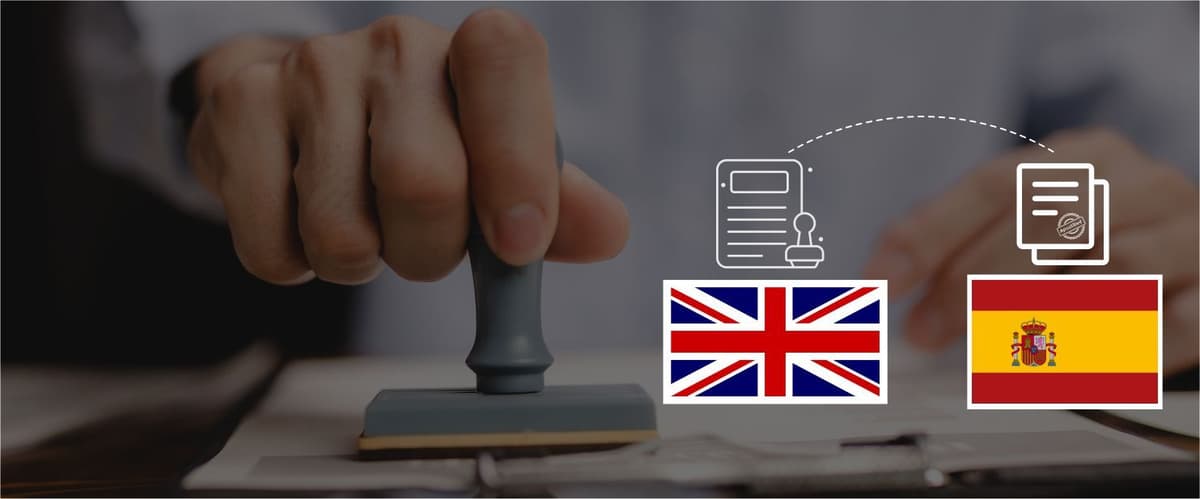
Birth certificates are among the most commonly apostilled documents for Spain, and they come up in almost every category of Spanish administrative process. Here is everything you need to know.
Which Birth Certificate Do You Need?
There are two main types of birth certificate in England and Wales: the short certificate and the full certificate (also called a long certificate or full extract). For Spanish purposes, you should almost always obtain the full certificate, which includes the names and details of both parents, the parents' occupations, and other information. The short certificate only shows the child's name, date, and place of birth and is insufficient for many Spanish purposes.
Where to Obtain a Birth Certificate
Apostilling a Birth Certificate
A freshly issued birth certificate from the GRO, NRS, or GRONI should be apostille-ready it will bear the signature of the Registrar General or a deputy, which the FCDO can verify. Simply submit the certificate to the FCDO with the appropriate fee.
When Spain Will Ask for an Apostilled Birth Certificate
• Residency applications under various visa categories• Marriage in Spain (registrar/civil registry)• Registering births of children born to UK nationals in Spain• Inheritance and estate proceedings• School enrollment for some institutions• Applications for Spanish nationalityMarriage certificates follow essentially the same process as birth certificates, with a few specific considerations.
You need the full marriage certificate the one showing both parties' details not just a commemorative certificate. Commemorative certificates issued by the church or venue are NOT official documents and cannot be apostilled. You need the certified copy from the civil register.
For church marriages in England and Wales, the marriage register is held by the church but a certified copy can be obtained from the local register office or the GRO. The certificate needs to bear the official signature of the superintendent registrar or equivalent.
Religious marriages celebrated abroad but with UK registration may require specific handling consult the GRO or the FCDO if your marriage has any international elements.
Educational certificates from UK universities and awarding bodies present some interesting considerations for apostilling.
Most UK universities issue degree certificates bearing the signature of the Vice-Chancellor or equivalent, along with the university seal. The FCDO should hold the signatures and seals of all established UK universities and major awarding bodies.
However, some certificates from smaller or newer bodies may not be immediately on the FCDO register. In these cases, the FCDO will usually require you to have the certificate countersigned or endorsed by the awarding body in a form they can verify.
Important: Original degree certificates can be irreplaceable. Many people choose to have a certified copy made by a notary public and have the notarial copy apostilled, rather than risking their original certificate. However, some Spanish institutions specifically require the original apostilled certificate, so check the requirements of the receiving authority first.
The ACRO Criminal Records Office provides police certificates for UK nationals, which can be apostilled for use abroad. Here is the complete process:
• Apply to ACRO at www.acro.police.uk for an international criminal record check• ACRO will conduct a check of the Police National Computer and issue a certificate• The certificate will show any cautions, reprimands, or convictions, or confirm that you have no relevant criminal record• Submit the ACRO certificate to the FCDO for apostillingProcessing time from ACRO is 10 to 20 working days for a standard application. Rush processing may be available for an additional fee.Spanish authorities require an ACRO certificate that has been issued within the last 3 to 6 months (requirements vary by visa type and authority). Plan your apostille timing carefully, especially if you are applying for a visa through a consulate that has a specific validity window.
For most Spain visa categories particularly the Non-Lucrative Visa and Golden Visa you need to show sufficient income or financial means. The question of whether those income documents need apostilling is one of the most frequently misunderstood parts of the process.
The rule is straightforward in principle: if the document was issued by a UK public authority (a government department, an official body), it may need apostilling. If it is a private document (a bank statement, a letter from your financial adviser), it does not need apostilling.
Documents that need apostilling for Spain income requirements:
Documents that do not need apostilling:
One important practical note: even when a document does not require an apostille, it will need a sworn Spanish translation if it is going to a Spanish authority. The sworn translation requirement applies regardless of whether the document has been apostilled.
DWP letters and similar government documents follow the same apostille process as other public documents apply to the FCDO with the original letter, pay the fee per document, and allow 3–15 working days for processing.
Powers of Attorney (POA) for use in Spain are among the most commonly notarised and apostilled UK documents. They are needed when you authorise someone in Spain ( a Spanish lawyer) to act on your behalf for property purchases, sales, legal proceedings, or other matters. The process for a Spanish POA is:
1. You and your UK solicitor or notary public draft the POA (ideally in both English and Spanish, though English-only can work if it will be translated)2. You sign the POA before a UK Notary Public, who certifies your signature3. The notarised POA is submitted to the FCDO for apostilling4. The apostilled POA is sent to Spain, where your authorised representative can act for youSpanish property lawyers are very familiar with this process. A Spanish abogado will draft the POA for you, have it signed in the UK, and walk you through the entire process. The FCDO apostille confirms to the Spanish notary (notario) that the UK notary who certified your signature is legitimate.
For UK companies doing business in or with Spain, several types of company documents may need apostilling:
| Document | Typical Use in Spain |
| Certificate of Incorporation | Setting up Spanish branch; commercial contracts |
| Certificate of Good Standing | Bank account opening; contract execution |
| Memorandum & Articles of Association | Shareholder agreements; corporate transactions |
| Director/Shareholder Resolutions | Authorising transactions; real estate purchases |
| Registered Office Certificate | Tax registration; regulatory applications |
Companies House documents can usually be downloaded from the Companies House website, but for apostilling purposes, you may need a certified or signed version rather than a simple download. Check with the FCDO and Companies House about the appropriate format.
UK adoption orders and related documents for use in Spain (for example, in inheritance proceedings involving adopted children, or when an adopted UK national needs to establish their legal identity in Spain) need to be apostilled. Adoption orders are court documents and the FCDO should be able to apostille them if they bear the court seal and registrar's signature.
UK wills, grant of probate documents, and letters of administration are frequently needed in Spanish inheritance proceedings, particularly when a UK national has left assets in Spain. These are court or official documents that can be apostilled. Given the complexity of cross-border inheritance law (which involves both Spanish and UK law, and potentially EU succession regulations), professional legal advice from a lawyer experienced in both jurisdictions is strongly recommended.
Need help with your application or background check?
Contact us now and speak with a dedicated Globeia expert today.

