
For many UK nationals, the idea of waking up to Mediterranean sunshine without the obligation to work locally is very appealing. The Non-Lucrative Visa (NLV) makes this possible for those who have enough savings or a steady income to support themselves.
Applicants need to show Spanish authorities that they are financially stable, healthy, and law-abiding. Among the documents, the ACRO police certificate, which must be apostilled, is the most critical as it verifies you have no criminal record. Other documents include:
Practical tip: Begin gathering your documents well in advance, as some consulates may request additional apostilled evidence of income. This visa is ideal for retirees, remote savers, or anyone wanting to enjoy Spain’s lifestyle without local employment obligations.
For those moving to Spain for employment, the Work Visa provides the legal framework to live and work in the country. Often, your Spanish employer will act as your sponsor, but you still need to demonstrate your suitability and lawful background.
Key documents include:
Why apostilles matter: They allow Spanish authorities to accept your qualifications and criminal record without additional checks, preventing delays that can stall your move. This visa is especially important for professionals transferring within multinational companies or filling roles in sectors requiring formal recognition of credentials.
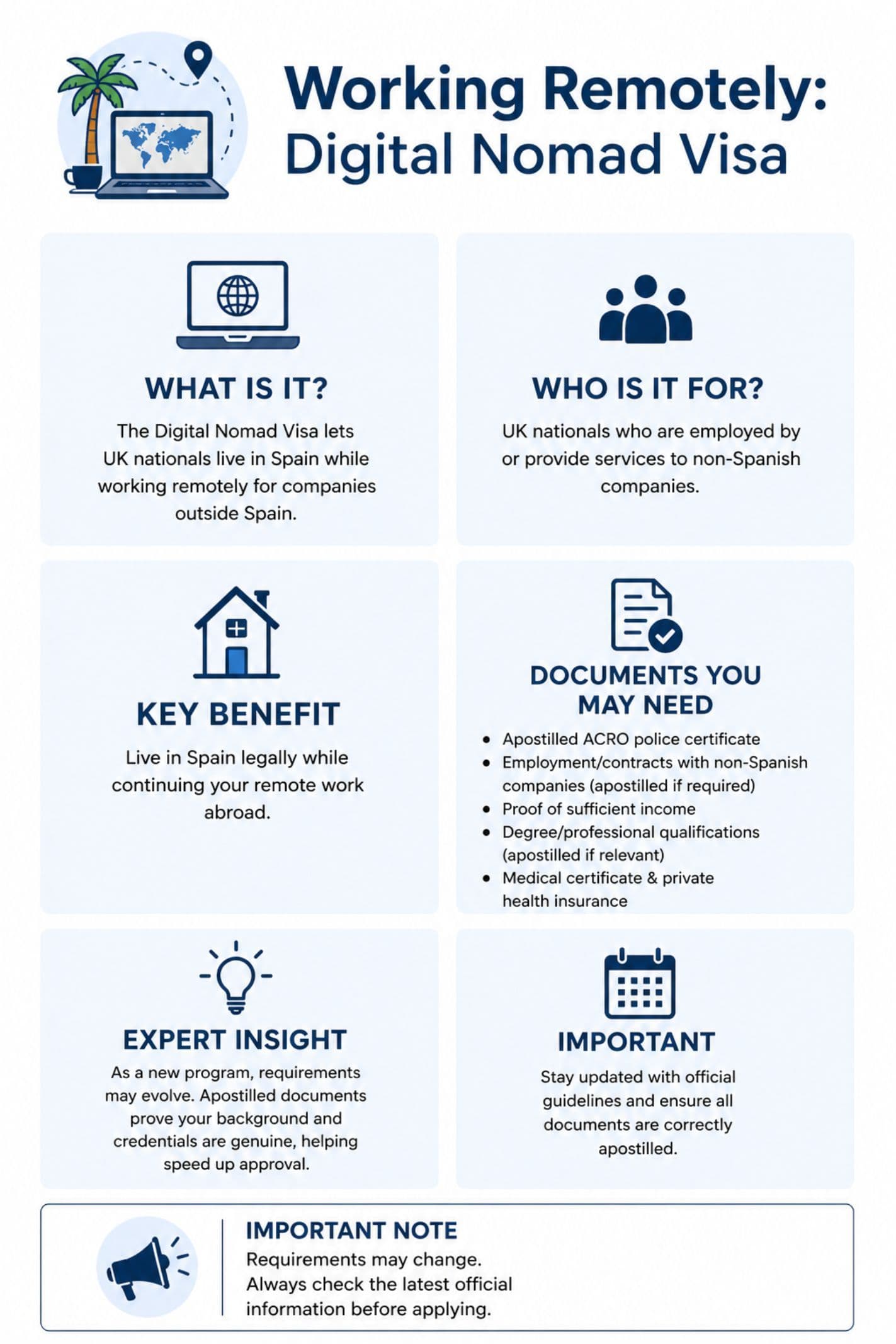
Spain has recognised the growing trend of remote work with the Digital Nomad Visa, aimed at UK nationals who provide services or are employed by companies outside Spain. This visa allows you to live in Spain while legally working remotely.
Documents you may need:
Expert insight: Since this visa is relatively new, requirements may change as the program evolves. Apostilled documents are critical, as they show Spanish authorities that your background and professional credentials are genuine, which can speed up approval.
Buying property in Spain is more than a lifestyle choice it’s a legal process that often requires interaction with a Spanish notary (notario). If you are not in Spain, a notarised and apostilled Power of Attorney allows a representative to complete the purchase on your behalf.
Essential documents include:
Practical insight: Apostilled Powers of Attorney are essential for remote property purchases. They give your lawyer legal authority and prevent the transaction from being delayed due to missing documentation.
Planning to marry in Spain? Both civil and religious ceremonies recognised by the Spanish state require official documentation submitted to the Registro Civil. Apostilled documents confirm your identity, legal status, and marital eligibility.
Key documents include:
Why this matters: The Certificate of Single Status is crucial to prove you are legally free to marry. Civil registry processing can take several months, so it’s important to gather apostilled documents early to avoid unnecessary delays.
For UK students aiming to attend Spanish universities, the Student Visa ensures your legal residence while pursuing studies. Apostilled academic certificates are often necessary to validate qualifications.
Commonly required documents:
Tip: Some universities require homologación, the official recognition of UK qualifications by the Spanish Ministry of Education. Apostilled documents are usually part of this process, ensuring your academic achievements are recognised.
UK nationals establishing a business in Spain (Sociedad Limitada) or registering as self-employed (autónomo) must provide documentation to confirm identity, professional qualifications, and company legitimacy. Apostilles play a critical role in validating UK documents in Spain.
You may need:
Practical note: Business formation involves notaries, the Commercial Registry (Registro Mercantil), and tax authorities. Apostilled documents help prevent delays and ensure your credentials are legally recognised.
If a UK national dies leaving assets in Spain, or if a UK national inherits from someone who had assets in Spain, the Spanish inheritance process will require apostilled UK documents including:
Important: Spanish inheritance law differs from UK law. Apostilled documents ensure that UK legal documents are recognised, but expert legal advice from a lawyer familiar with both systems is strongly recommended to avoid disputes or delays.
Need help with your application or background check?
Contact us now and speak with a dedicated Globeia expert today.

