
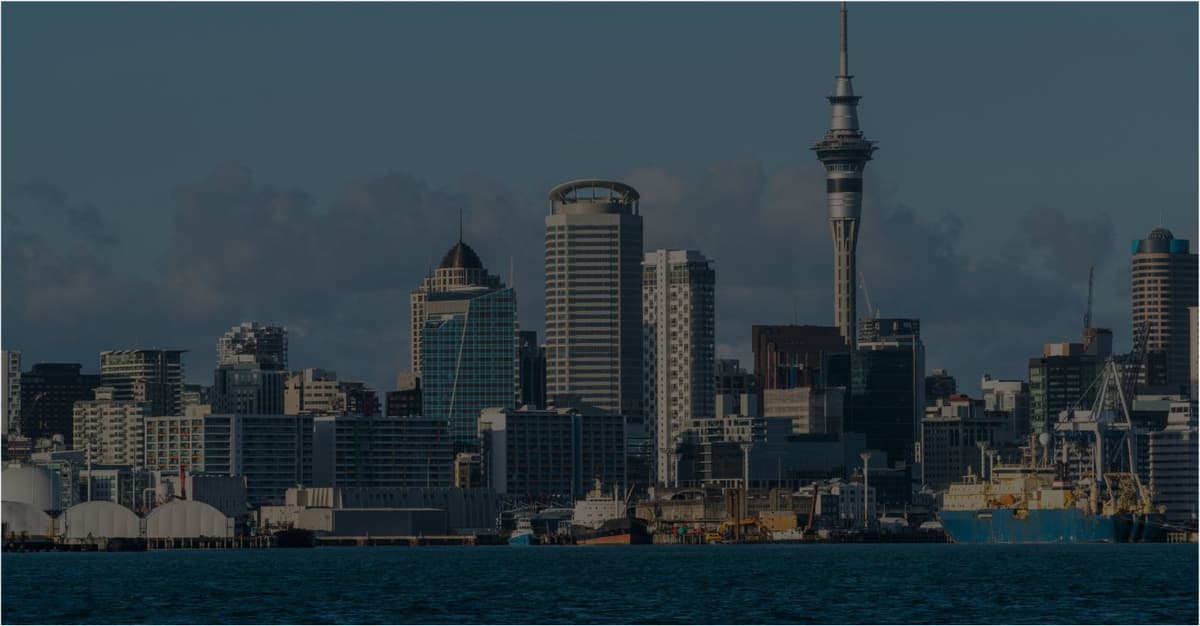
New Zealand has no single dominant coastal metropolis like Los Angeles. No New York. The choices are fewer, the cities are smaller, and the quality of each depends heavily on what matters to you.
Auckland is where most immigrants land and where most stay. It is home to roughly 1.7 million people, about a third of New Zealand's entire population. The international airport, the biggest job market, the most corporate offices, and the most diverse expat community are all here.
The downsides: Auckland is expensive. Housing costs have moderated since the peak of 2021 but remain high. Traffic is really bad, Auckland was built for cars and has not fully adapted to its size. The city sprawls across a narrow isthmus between two harbours, which limits road options.
What Auckland has that other NZ cities lack: global cuisine, a larger concert and arts scene, more professional opportunities in finance, tech, and management consulting, and the only direct flights from the US.
American expat communities are concentrated in the North Shore and in inner-city suburbs like Parnell, Remuera, and Ponsonby. Median weekly rent for a 3-bedroom house in Auckland: approximately NZD $750–$900 (mid-2025 data).
Wellington is New Zealand's capital and its second-largest urban area, with around 440,000 people. It is walkable in a way Auckland is not. You can walk from the train station to Parliament to Cuba Street's cafes in 20 minutes.
Wellington is the home of New Zealand's public service, the creative industries (Weta Workshop, New Zealand's film sector), and an outsized food and coffee culture. It consistently ranks as one of the world's most liveable small cities.
The catch: Wellington is windy. Not sometimes windy consistently, often aggressively windy. The harbour is beautiful; the gusts can hit 90km/h. Locals call it "Windy Wellington" without irony. If you hate wind, factor this in.
Salaries in Wellington are driven partly by public sector rates, which are competitive. Housing is cheaper than Auckland. A 3-bedroom in the suburbs runs NZD $600–$750 per week.
Christchurch is New Zealand's third-largest city, on the South Island's east coast. It suffered devastating earthquakes in 2010 and 2011. What came out of the rebuild is a city with some of the newest infrastructure and urban design in the Southern Hemisphere.
Christchurch is the most affordable major city in New Zealand. Housing costs are the lowest of the main centres. The Canterbury Plains offer space, farmland, and skiing within two hours. The city attracts engineers, construction professionals, and people who value the outdoors over urban culture.
American expats living here consistently describe it as underrated. It has a growing food and arts scene, a large university, and easy access to the Southern Alps. Median weekly rent for 3-bedroom house: approximately NZD $550–$650.
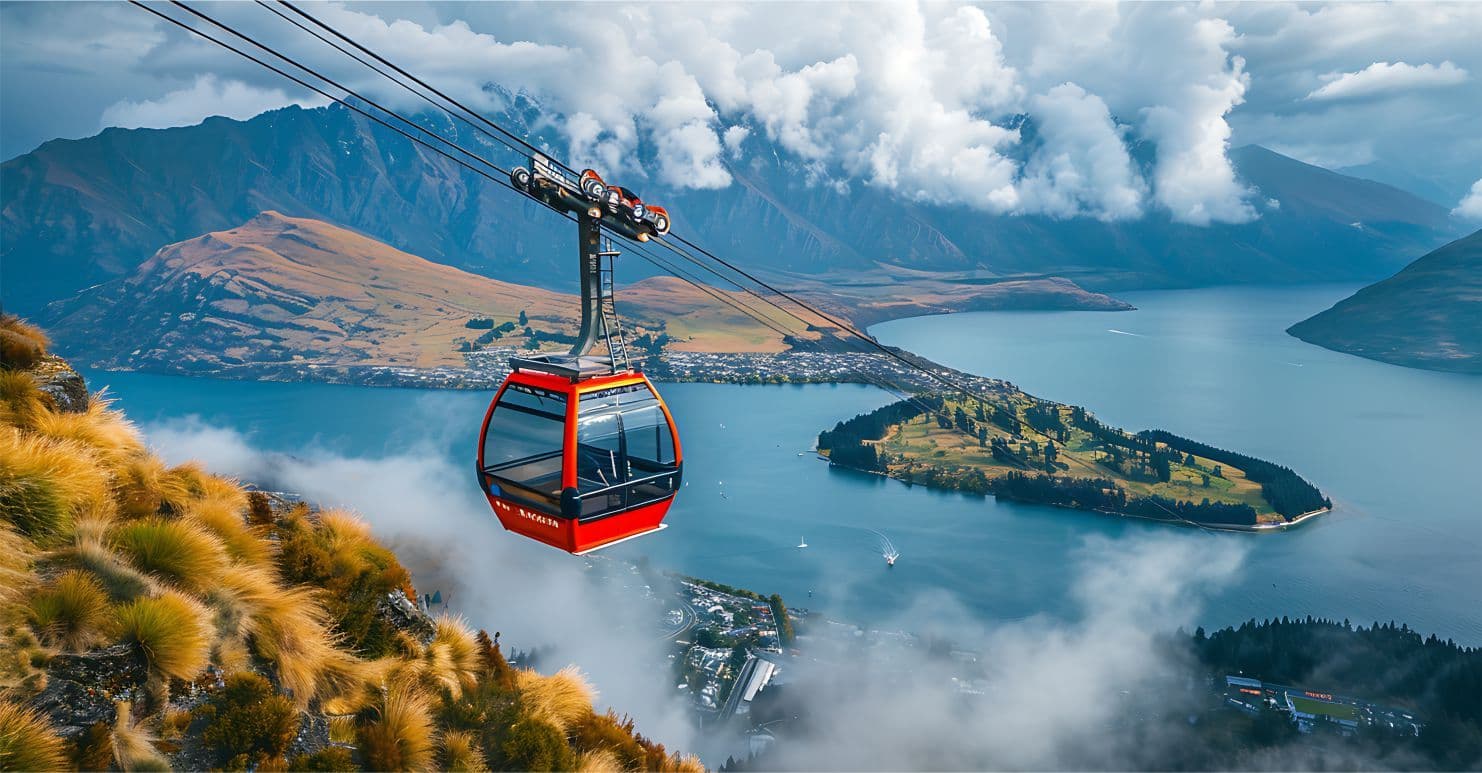
Queenstown is the adventure capital. It is truly absurdly beautiful - sitting on Lake Wakatipu beneath the Remarkables mountain range. Skiing, bungee jumping, mountain biking, and tramping are all within reach year-round.
The housing market is driven by tourism and short-term rentals. Long-term accommodation is expensive and scarce. Average wages outside hospitality and tourism are limited. Queenstown is a real option for people who can work remotely or own their business, but building a professional career there is difficult. Median weekly rent for a 3-bedroom: NZD $750–$900.
Dunedin in the southern South Island is one of New Zealand's most affordable cities. It has a university, a lively arts scene, Victorian and Edwardian architecture, and a distinct personality shaped by its Scottish heritage. Winters are cold. The pace is slow. For families who want space, low cost, and community, Dunedin makes a compelling case.
Hamilton, Tauranga, and Napier tend to be overlooked by new arrivals but offer good infrastructure, lower costs, and proximity to Auckland (Hamilton is 1.5 hours south). Tauranga has strong sun, a beach lifestyle, and a growing retirement and professional population. Napier has a spectacular Art Deco cityscape and a wine region on its doorstep.
The North Island has the larger population, warmer weather (particularly in Northland and the Bay of Plenty), and the main employment markets. The South Island has the dramatic alpine scenery, more space, lower costs, and a quieter pace. Many Americans choose the North Island for practicality and the South Island for lifestyle.
Need help with your application or background check?
Contact us now and speak with a dedicated Globeia expert today.

